A technician diagnoses a refrigerator that is not cooling, replaces the failed component, tests the appliance and collects payment. The customer is satisfied. The invoice is closed. Operationally, the job is finished.
But something else happened: the company demonstrated real expertise, solved a real problem and created a customer experience worth remembering. The question is whether any of that value continues working for the business after the technician leaves.
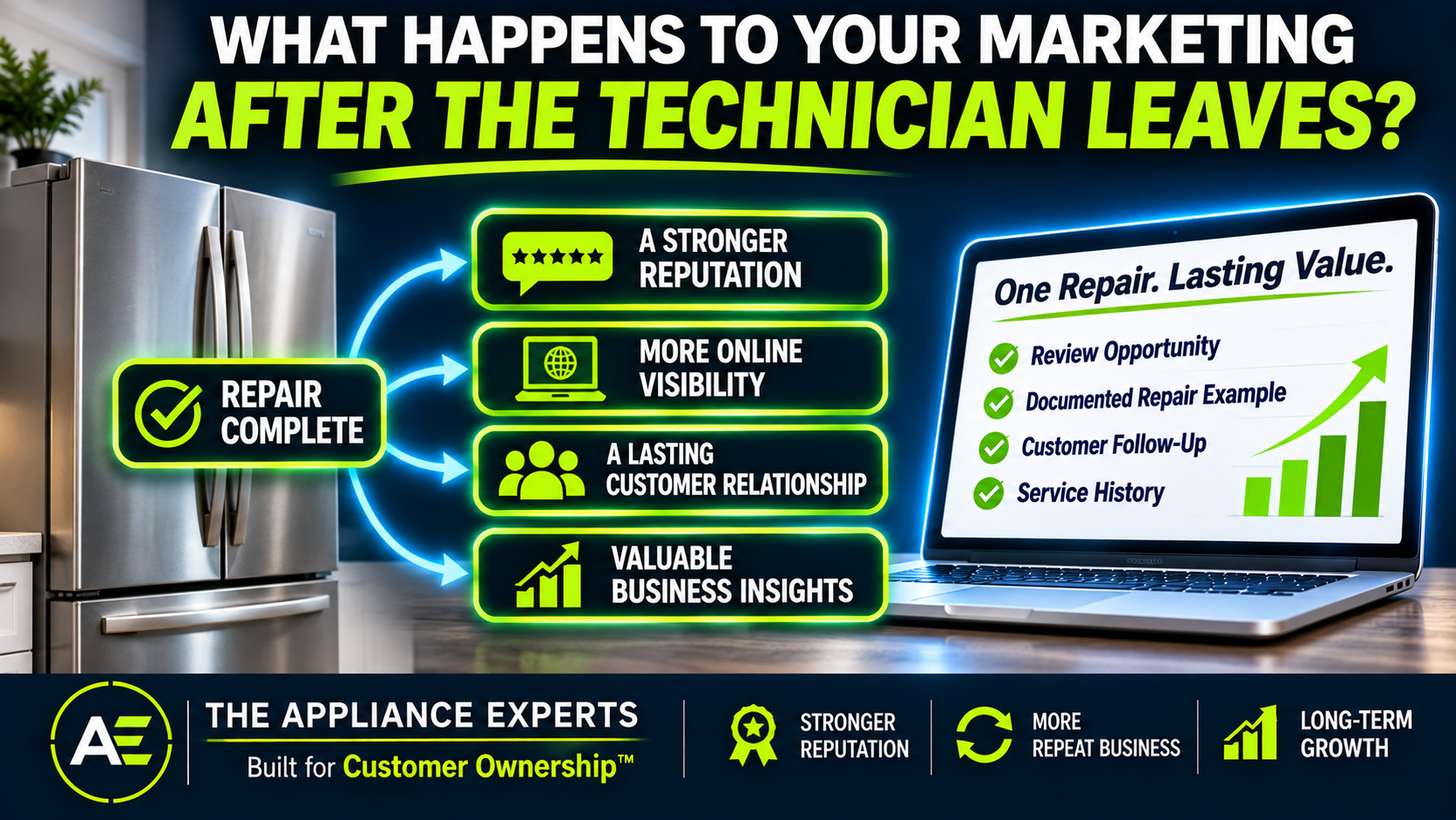
A completed appliance repair can be more than a transaction. With a simple, repeatable process, it can also strengthen reputation, preserve service knowledge and support future customer relationships.
Two Companies. The Same Repair.
Company A: The job ends at the invoice
The technician completes the repair, collects payment and closes the work order. The company earns revenue, but little of the experience becomes a lasting marketing resource.
Company B: The experience is preserved
The technician completes the same repair. The service record captures the appliance, the customer’s original concern, the diagnosis, the work performed and the outcome. Appropriate photos may be saved with permission. The customer has a natural opportunity to provide honest feedback, and the company retains the information needed for relevant future service.
When useful and appropriate, the company can turn that accurate record into a customer-facing repair example. Both businesses completed the job. Only one created a repeatable opportunity for that job to keep contributing value.
The Repair Is More Than a Transaction
Most repair companies already record customer names, appliance details, parts used and charges. Those details are necessary for scheduling, service and accounting. But completed work can also create four additional kinds of value:
Reputation value: A real customer can describe the experience in an authentic review.
Visibility value: Accurate records and appropriate images can support useful examples of the work the company actually performs.
Customer relationship value: Service history helps the business remain helpful and recognizable to people it has already served.
Business intelligence value: Over time, service records can reveal patterns in appliances, components and recurring problems.
None of this requires inventing a story. The service experience already happened. The opportunity is to preserve its value responsibly.
The Technician Does Not Need to Become a Marketer
Technicians should focus on diagnosing and repairing appliances, not writing blog posts or managing social media. A brief capture checklist can give the office or marketing team enough reliable information to work with later.
Record the appliance brand and model, when available.
Write down the customer’s original complaint in accurate terms.
Record the confirmed diagnosis and repair actually performed.
Take one or two useful photos when appropriate and permitted.
Confirm the result, including whether the repair was completed.
Keep the process short enough to use consistently. Do not fill missing details with assumptions. A clear note that an outcome was not documented is better than a confident but inaccurate claim.
The office or marketing team can then decide whether the job calls for a follow-up, a review invitation, or a public example. Human expertise creates the evidence; a repeatable process preserves it.
The Completed Repair as a Visibility Asset™
Visibility Assets™ are useful digital resources that help people discover, understand and evaluate a company’s expertise. A service page may say, “We repair Whirlpool refrigerators.” A documented repair example can explain what happened during a specific Whirlpool refrigerator service call, what the technician found, what work was completed and what the verified outcome was.
That second description should come from a real, supportable service record—not a generic AI-generated story. With appropriate permissions and privacy safeguards, selected examples can help future customers understand the types of problems the company has handled.
REPAIR → CAPTURE → DOCUMENT → DISTRIBUTE
Distribution might mean improving a relevant service page, publishing a helpful example, or using aggregated experience to answer common questions. Not every repair needs its own article, and publishing an example does not guarantee Google rankings or AI recommendations.
The Review Moment™ Is Part of the Same Process
A completed repair is also a natural time to invite a customer to describe their experience. The customer knows whether the technician communicated clearly, respected the home and resolved the problem.
We call this the Review Moment™: Human Moment → Automated Execution. The real experience comes first. A consistent follow-up system can invite honest feedback afterward, without pressuring customers for five-star reviews or offering incentives for positive ratings.
A review is not the only possible result. The service history also becomes part of a longer relationship with that customer.
Why This Connects to Customer Ownership™
A customer may be pleased with a repair and still forget the company’s name a few years later. That is why the customer database and an appropriate process to stay connected with past customers matter beyond the invoice.
Accurate records can help a company provide better future service, recognize returning households and communicate usefully when permission allows. Respect contact preferences, privacy requirements and applicable email or text-marketing rules.
One completed repair can support two different goals: making expertise more visible to future customers and preserving a relationship with an existing one. Both reduce the need to treat every future service opportunity as a completely new introduction.
Try the Last-25-Repairs Test
Look at your last 25 completed service calls. How many created anything of lasting marketing value beyond the payment? Check for:
A complete, accurate customer and appliance record
An appropriate opportunity for honest customer feedback
Useful, permission-cleared documentation of the repair
A practical way to help the customer remember and contact the business later
You do not need 25 published stories. You need a process that makes the most useful evidence and relationships less likely to disappear into the invoicing system.
A Simple Five-Step Starting Plan
1. Review five recent jobs and assess what was recorded.
2. Identify the single most important missing detail.
3. Add that detail to a short technician checklist.
4. Check whether completed jobs lead to appropriate follow-up and honest review invitations.
5. Choose one well-documented repair to turn into a helpful, accurate example.
Start small. The goal is to make the next successful repair create a little more lasting value than the last one.
Don’t Just Complete the Repair. Preserve the Value It Creates.
A successful service call can strengthen reputation, demonstrate expertise and preserve a customer relationship. The repair may end when the technician leaves, but the value created by that repair does not have to end there.
Get found. Get chosen. Get remembered.
Find the Gaps in Your Visibility and Customer Relationships
A complimentary Visibility Snapshot™ can help identify opportunities in how your appliance repair company gets found, gets chosen and gets remembered.